How Much Does It Cost to Run a Sprinkler?
Sprinklers are billed by the gallon, not the hour. Here's how to turn flow rate and run time into dollars, with real figures for hose sprinklers, in-ground zones and drip.
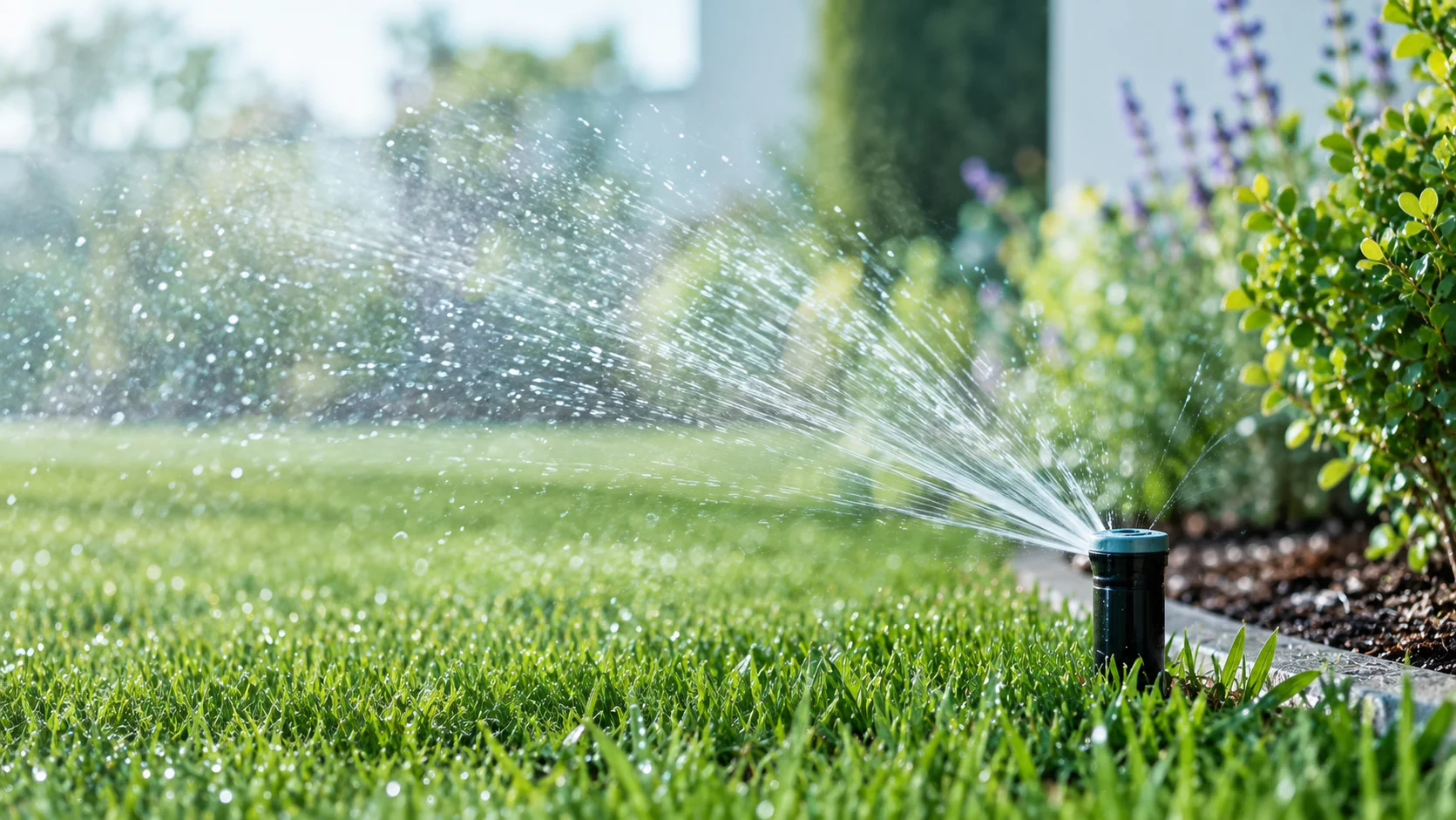
Most home sprinklers cost about $2 to $5 per hour to run, assuming water priced at a mid-range $8 per 1,000 gallons. The reason is simple: your utility bills you for gallons, and most sprinklers push through 4 to 10 gallons every minute. A small hose sprinkler left on for 30 minutes costs about a dollar, while a six-zone in-ground system running its full cycle can cost $10 or more each time. Here's how to work out your own number, what shifts it, and where the money usually leaks away.
Skip the math Sprinkler Water Cost Calculator Open →Sprinkler cost per hour at a glance
Cost per hour depends on two things only: how many gallons per minute (gpm) the sprinkler delivers and what your utility charges per gallon. This table shows the hourly cost across a realistic range of both:
| Flow rate | Gallons per hour | At $5 / 1,000 gal | At $8 / 1,000 gal | At $12 / 1,000 gal |
|---|---|---|---|---|
| 2 gpm | 120 | $0.60 | $0.96 | $1.44 |
| 4 gpm | 240 | $1.20 | $1.92 | $2.88 |
| 6 gpm | 360 | $1.80 | $2.88 | $4.32 |
| 10 gpm | 600 | $3.00 | $4.80 | $7.20 |
| 15 gpm | 900 | $4.50 | $7.20 | $10.80 |
The $5, $8 and $12 prices are round illustration points, not quotes from any utility. Water and sewer rates vary widely by city, so swap in the figure from your own bill.
How much water different sprinklers use
The gpm number is the hard part, because it depends on the sprinkler type, the nozzle size and your water pressure. These are typical ranges for common setups, converted to hourly cost at $8 per 1,000 gallons:
| Sprinkler type | Typical flow | Gallons per hour | Cost per hour at $8 |
|---|---|---|---|
| Hose-end oscillating or impact sprinkler | 3–8 gpm | 180–480 | $1.44–$3.84 |
| In-ground pop-up spray zone | 6–12 gpm | 360–720 | $2.88–$5.76 |
| In-ground rotor zone | 8–16 gpm | 480–960 | $3.84–$7.68 |
| Drip irrigation zone | 1–4 gpm | 60–240 | $0.48–$1.92 |
These are ballpark figures for planning, not specifications. A zone's real flow is the sum of every head on it, so a zone with more heads or larger nozzles sits at the top of its range, and low pressure pulls it toward the bottom. Your measured number always beats a typical one.
How to calculate your own sprinkler cost
The math is two steps: turn run time into gallons, then turn gallons into dollars.
To find gpm without a spec sheet, use your water meter. Turn off everything else that uses water, note the meter reading, run the zone for exactly 10 minutes, and read it again. The difference in gallons, divided by 10, is your gpm. If your meter reads in cubic feet, multiply by 7.48 to get gallons.
Check the unit on your bill. Many utilities charge per CCF (hundred cubic feet), and one CCF is about 748 gallons. To compare a per-CCF price with the per-1,000-gallon figures here, divide the CCF price by 0.748.
Your bill may also include a fixed service charge and tiered pricing, where each higher block of usage costs more per gallon. Those extra gallons from heavy summer watering are often billed at the top tier, so the marginal cost of a sprinkler can be well above your average rate. Our sprinkler water cost calculator lets you plug in your own flow, run time and rate.
What it costs to water a lawn
Run-time math is useful for a single session, but lawns are usually watered by depth. One inch of water over one square foot is a little over 0.62 gallons (1 square foot × 1 inch is 144 cubic inches, and a US gallon is 231 cubic inches), so the volume scales directly with lawn area:
| Lawn area | Gallons per inch | At $5 / 1,000 gal | At $8 / 1,000 gal | At $12 / 1,000 gal |
|---|---|---|---|---|
| 2,500 sq ft | 1,559 | $7.79 | $12.47 | $18.70 |
| 5,000 sq ft | 3,117 | $15.59 | $24.94 | $37.40 |
| 10,000 sq ft | 6,234 | $31.17 | $49.87 | $74.81 |
If that 5,000 square foot lawn gets 1 inch a week for four weeks, the total is roughly 12,500 gallons and about $100 at $8 per 1,000 gallons. Real systems waste some of what they spray, so the water you buy runs higher than the water the grass receives. The EPA estimates that as much as half of water used for irrigation is wasted through evaporation, wind and runoff from inefficient methods and systems, which is why a tuned system can cost far less than a sloppy one covering the same lawn.
Real-world cost examples
Here are four common situations, each at $8 per 1,000 gallons:
Hose sprinkler, 30 minutes
$1.20
About 150 gallons at 5 gpm. Watering twice a week for a month costs roughly $10.
Six-zone in-ground cycle
$9.60
Six zones at 10 gpm for 20 minutes each is 1,200 gallons. Run three times a week, that's about $125 a month.
Drip zone, 1 hour
$0.96
A 2 gpm drip zone for an hour uses 120 gallons, a fraction of a spray zone's hourly use.
Zone stuck on overnight
$38.40
A 10 gpm zone left running 8 hours moves 4,800 gallons, the cost of a stuck valve or forgotten hose.
What changes the cost
Your rate structure. Tiered pricing, seasonal rates and fixed charges all change the true cost per gallon. If your utility prices summer use at a higher tier, your sprinkler's marginal rate can be double your winter rate.
Sewer charges. Irrigation water doesn't enter the sewer, and many utilities bill sewer on winter or indoor use for that reason. If yours charges sewer on every gallon, your effective rate is higher. A dedicated irrigation meter, where offered, usually skips sewer fees.
Water pressure. Excess pressure atomizes spray into mist that drifts and evaporates, and it pushes more gallons through each nozzle. The EPA notes that irrigation systems operating above recommended pressure waste water, and its WaterSense program labels sprinkler bodies that regulate pressure for that reason.
Climate and season. Outdoor use averages about 30 percent of household water nationwide, according to the EPA, but in dry climates like the Southwest it can reach 60 percent. The hotter and drier your summer, the more run time your lawn needs.
Leaks and broken heads. A cracked head or a weeping valve can run unnoticed for weeks. Because the water goes onto the ground, it never shows up as a drip you can hear, only as a higher bill.
Pumping energy. On municipal water, the electricity for valves and a controller is negligible. If you irrigate from a well or a booster pump, your cost is electricity rather than a water rate. As a rough estimate, a 1-horsepower pump draws about a kilowatt, so at 15 to 20 cents per kilowatt-hour it costs around 15 to 20 cents an hour to run, far less than buying the same water from a utility.
How to lower the bill
- Water less often, but deeper. The EPA points out that it's usually not necessary to water grass every day. Deep, infrequent watering builds deeper roots and cuts evaporation losses.
- Fix leaks and misaimed heads first. They are the cheapest savings, because you stop paying for water that lands on pavement.
- Check your pressure. If heads are misting, add pressure regulation before changing anything else.
- Use a smart or weather-based controller. It skips cycles after rain and adjusts run time to the season, so you stop watering on a fixed schedule regardless of conditions.
- Water early in the morning. Cooler air and calmer wind mean more water reaches the soil.
- Use drip for beds and shrubs. Delivering water at the roots uses far fewer gallons per hour than overhead spray.
The bottom line
A sprinkler's cost is flow rate times run time times your water price. For most households that works out to roughly $2 to $5 per hour of sprinkling, or about $100 a month to give a 5,000 square foot lawn an inch of water each week. Your own figure could sit well above or below that depending on your rates, sewer billing, pressure and how much water is lost on the way. Measure your gpm once with the water meter and you'll be able to price any watering schedule in seconds.
Frequently asked questions
How much does it cost to run a sprinkler for one hour?
Roughly $1.50 to $4 for a typical garden-hose sprinkler and $3 to $8 for a full in-ground zone, assuming water at $8 per 1,000 gallons. The exact figure is your flow rate in gallons per minute times 60, times your price per gallon.
How much water does a sprinkler use per hour?
A hose-end sprinkler commonly uses about 180 to 480 gallons per hour (3 to 8 gallons per minute). An in-ground spray or rotor zone often uses 360 to 960 gallons per hour, and a drip zone typically 60 to 240. These are typical ranges, so measure your own.
How much does it cost to water a lawn for a month?
Giving a 5,000 square foot lawn 1 inch of water per week takes about 12,500 gallons a month, which is roughly $100 at $8 per 1,000 gallons. Hot, dry climates and leaky or poorly tuned systems can push that figure much higher.
Does sprinkler water also go on my sewer bill?
It depends on your utility. Many cities bill sewer based on indoor or winter water use, so summer irrigation is not charged for sewer. Others charge sewer on every gallon through the meter unless you have a separate irrigation meter. Check your bill or ask your utility.
How do I find my sprinkler's flow rate in gallons per minute?
Read your water meter, run one zone or sprinkler for exactly 10 minutes with everything else off, read it again, and divide the gallons used by 10. For a hose sprinkler, timing how long it takes to fill a 5-gallon bucket also works.
Is drip irrigation cheaper to run than a sprinkler?
Usually, yes. A drip zone moves far less water per hour and puts it at the roots, so less is lost to wind and evaporation. The savings depend on the plants, soil and how well the system is set up.
Sources & references
Gallons-per-hour and cost figures in this guide are our own calculations from the formulas shown, using illustrative water prices and typical flow ranges. They are estimates, not quotes from a utility. The statements on outdoor water use and waste come from the EPA pages below:
- U.S. Environmental Protection Agency, WaterSense — Outdoor Water Use in the United States. Outdoor uses account for about 30 percent of household water use, up to 60 percent in dry climates, and as much as 50 percent of irrigation water may be wasted by inefficient methods and systems. (Archived EPA page.)
- U.S. Environmental Protection Agency, WaterSense — Spray Sprinkler Bodies. Irrigation systems that run above recommended water pressure waste water. (Archived EPA page.)

Water Quality & Sustainability Specialist · Portland, Oregon
Sarah Bennett is a water quality and sustainability specialist who writes the usage, cost and conservation guides on Water Calculator. Read full bio
MS · Specializes in water usage, water quality and sustainability