How Much Water Does a Toilet Use per Flush?
The answer depends almost entirely on the toilet's age: federal law has cut the standard flush from as much as 7 gallons to 1.6 gallons, and today's best models use even less.
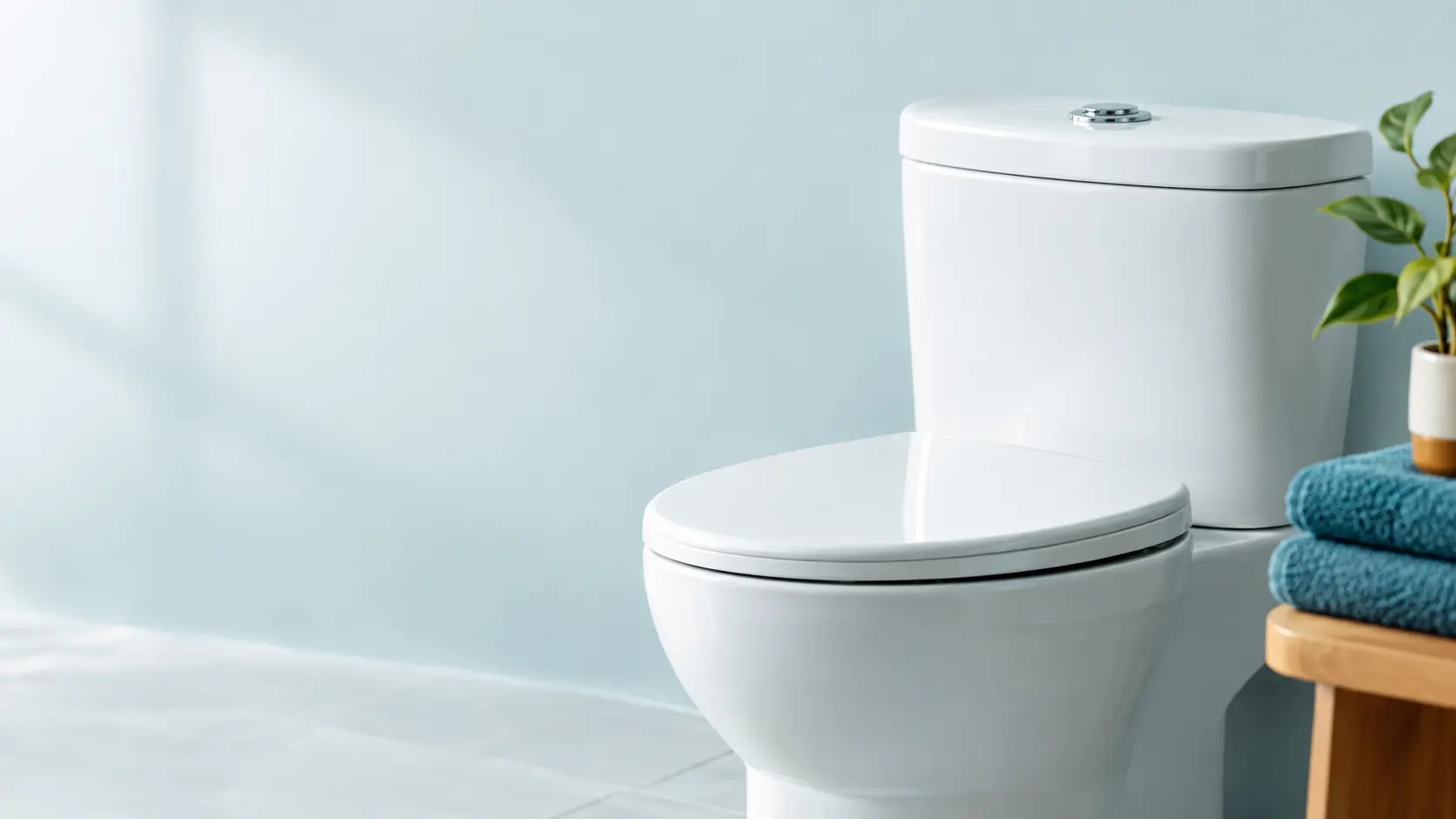
A toilet made today uses 1.6 gallons per flush or less — that's the maximum allowed under US federal law since 1994. The best modern models, certified under the EPA's WaterSense program, use 1.28 gallons per flush or less. Older toilets are a different story: anything installed before 1994 likely uses 3.5 gallons per flush, and toilets from before 1980 can use 5 to 7 gallons. The single biggest factor in how much water your toilet uses isn't how you flush it — it's how old the toilet is.
Skip the math Toilet Water Usage Calculator Open →Toilet water use at a glance
Toilets are the single largest source of water use inside the average home, accounting for nearly 30 percent of indoor water consumption. How much of that is wasted comes down to which generation of toilet is installed:
| Toilet type | Gallons per flush | Liters per flush |
|---|---|---|
| Pre-1980 toilet | 5–7 gal | 19–26.5 L |
| 1980–1993 standard toilet | 3.5 gal | 13.2 L |
| 1994–present federal standard | 1.6 gal | 6.0 L |
| WaterSense-certified (2007–present) | 1.28 gal or less | 4.8 L or less |
| Dual-flush, reduced mode | 0.8–1.1 gal | 3.0–4.2 L |
Two numbers matter most if you're trying to place a specific toilet: 1994, when the federal 1.6-gallon limit took effect, and 2007, when the WaterSense label began identifying toilets that beat that limit while still performing well.
Gallons per flush by toilet type
Beyond age, the flushing mechanism itself makes a difference in performance, if not always in the labeled gpf figure:
| Mechanism | Typical gpf | Notes |
|---|---|---|
| Gravity-fed tank | 1.28–1.6 gal | Most common; relies on the weight of the water alone. |
| Pressure-assisted tank | 1.0–1.6 gal | Uses compressed air to boost flush force; common in high-efficiency models. |
| Dual-flush | 0.8/1.6 gal (blended) | Separate buttons or handle positions for liquid and solid waste. |
| Flushometer-valve (commercial) | 1.28–1.6 gal | Found in offices, schools and other public restrooms; fed directly from the supply line. |
None of these mechanisms inherently uses more or less water than the others at a given gpf rating — the difference is in how reliably they clear the bowl at that volume.
Why the number keeps shrinking
Toilet water use didn't shrink because manufacturers decided to experiment — it shrank because of a law. The Energy Policy Act of 1992 set a national water-use standard for toilets, and every toilet manufactured for sale in the US after January 1, 1994 has been capped at 1.6 gallons per flush. Before that, there was no federal limit, and manufacturers built toilets to whatever volume worked reliably with the plumbing and bowl designs of the time — commonly 3.5 gallons, and considerably more in older housing stock.
The early years of the 1.6-gallon mandate were rocky. Some first-generation low-flow models didn't clear waste reliably in a single flush, which is where low-flow toilets picked up a reputation for needing a second flush. Manufacturers responded by redesigning bowl geometry, trapways and flush valves rather than just throttling the water volume, and by the early 2000s most 1.6-gallon toilets performed as well as their thirstier predecessors.
WaterSense didn't lower the legal limit — it created a voluntary bar above it. The EPA's WaterSense label, introduced in 2007, certifies toilets that use 1.28 gallons per flush or less — 20 percent below the federal standard — while passing independent performance testing. It's a voluntary program, so plenty of toilets sold today still use the full 1.6 gallons.
Work out your own toilet's water use
The fastest way to check is to lift the tank lid. Most toilets have a manufacture date and often a gallons-per-flush figure stamped into the porcelain near the waterline, or molded into the underside of the lid. If nothing is stamped, the manufacture date alone tells you most of what you need:
To turn a single flush figure into a household total, multiply by flushes per day and by the number of people using the toilet:
Swap in 1.28 for a WaterSense toilet, or 3.5 for an older one, and the same formula shows what a fixture swap is actually worth — which is exactly what the toilet water usage calculator does for your own household size and fixture.
How dual-flush toilets change the math
A dual-flush toilet offers a reduced-volume flush, typically 0.8 to 1.1 gallons, for liquid waste, and a full flush of up to 1.6 gallons for solid waste. The water savings depend entirely on which button gets used: a household that reliably chooses the reduced flush for roughly two-thirds of visits — a common real-world split — lands on a blended average in the neighborhood of a 1.1 to 1.3 gallon-per-flush toilet, competitive with a single-flush WaterSense model. A household that defaults to the full flush out of habit gets none of that benefit and simply owns a 1.6-gallon toilet with an extra button.
This is the main reason dual-flush toilets show more variation in real-world water use than single-flush models: the hardware sets a ceiling, but user behavior sets the actual number.
What it looks like over a year
Averaged over a year, the difference between toilet generations adds up fast — for one person, at an estimated five flushes a day:
Pre-1980 toilet (6 gpf, est.)
~10,950 gal/yr
Roughly 3.7× the water of a current WaterSense model, for identical use.
Pre-1994 toilet (3.5 gpf)
~6,388 gal/yr
Still the most common toilet in older US housing stock.
Federal standard (1.6 gpf)
~2,920 gal/yr
The legal maximum for any toilet made since 1994.
WaterSense model (1.28 gpf)
~2,336 gal/yr
About 20% less than the federal standard, per flush.
Figures above are estimates based on an assumed five flushes per person per day and a fixed gallons-per-flush value; actual household use varies with occupancy and habits.
What else affects the total
Running toilets. A worn flapper or fill valve can leak silently, wasting anywhere from tens to several hundred gallons a day — often far more than normal flushing. A toilet that keeps refilling on its own, or where a few drops of food coloring in the tank show up in the bowl without flushing, has a leak worth fixing.
Double-flushing. Some households habitually flush twice out of an outdated assumption that low-flow toilets need it. Modern 1.6 and 1.28 gpf toilets are designed and independently tested to clear waste in a single flush, so a second flush is usually just extra water rather than a necessity.
Occupancy and habits. Guests, children learning to use the toilet, and simple daily variation all move the flush count up or down. Five flushes per person per day is a reasonable planning average, not a fixed rule for any one household.
Retrofits. Toilet tank displacement devices and adjustable flush valves can trim the volume of an older toilet somewhat, but they don't turn a 3.5-gallon toilet into a 1.6-gallon one — the bowl and trapway geometry are designed around the original volume, and cutting too far risks incomplete flushes.
The bottom line
If your toilet was installed after 2007 and carries a WaterSense label, it's already using close to the least water technically feasible — 1.28 gallons per flush or less. If it was installed between 1994 and 2007, it's almost certainly at the federal maximum of 1.6 gallons per flush. And if it predates 1994, it's very likely using 3.5 gallons or more per flush — which, multiplied across thousands of flushes a year, is usually the single largest water-saving upgrade available in an older home.
Frequently asked questions
How many gallons per flush does a modern toilet use?
Any toilet made for sale in the US since 1994 is limited to 1.6 gallons per flush by federal law. WaterSense-certified models, available since 2007, use 1.28 gallons per flush or less while still clearing the bowl in one flush.
How much water did old toilets use per flush?
Toilets made before 1980 commonly used 5 to 7 gallons per flush. Toilets made from the early 1980s through 1993 typically used 3.5 gallons per flush, the standard before the 1994 federal limit took effect.
How much water do dual-flush toilets use?
Dual-flush toilets offer two options: a reduced flush of roughly 0.8 to 1.1 gallons for liquid waste and a full flush of up to 1.6 gallons for solid waste. Used correctly, the blended average often lands close to a WaterSense single-flush model.
How can I tell how many gallons per flush my toilet uses?
Lift the tank lid and look for a stamped date and gpf figure on the porcelain, often inside the tank near the waterline or on the underside of the lid. If there's no marking, the toilet's manufacture date is the best clue: pre-1994 models are almost always 3.5 gallons per flush or more.
Do low-flow toilets need to be flushed twice?
Early 1990s low-flow models sometimes did, which hurt the technology's reputation. Current 1.6 and 1.28 gallon-per-flush toilets use redesigned bowls, trapways and flush valves, and independent testing requires them to clear solid waste in a single flush to qualify for sale or for the WaterSense label.
How much water does a running toilet waste?
A toilet with a worn flapper or fill valve can silently waste anywhere from tens of gallons to several hundred gallons a day, far more than any single flush. A running toilet is one of the most common sources of unexplained spikes in a water bill.
How much water does a household use flushing toilets each year?
For one person flushing an average of five times a day, a 1.6 gallon-per-flush toilet works out to roughly 2,900 gallons a year, while a 1.28 gallon-per-flush WaterSense model comes to about 2,340 gallons. An old 3.5 gallon-per-flush toilet used by the same person would run about 6,400 gallons a year.
Sources & references
The figures in this guide follow standard reference values for toilet flush volumes and federal water-efficiency standards:
- U.S. Environmental Protection Agency, WaterSense — Residential Toilets. Federal standard of 1.6 gallons per flush; WaterSense-labeled toilets at 1.28 gallons per flush or less; toilets account for nearly 30% of indoor water use.
- U.S. Department of Energy — Water Closets (Flush Toilets). Energy Policy Act of 1992 water-use standards, codified at 10 CFR 430.32.
- Alliance to Save Energy — Congress Set Toilet Standards in 1992. History and effective date of the 1994 federal standard, and pre-1994 average of 3.5 gallons per flush.

Water Quality & Sustainability Specialist · Portland, Oregon
Sarah covers water usage, treatment and conservation on Water Calculator, focusing on the everyday fixtures and habits that drive household water bills. Read full bio
M.S. in water quality & sustainability · Specializes in usage, cost and conservation