How to Find a Hidden Water Leak in Your Home
A running meter with every tap off means water is escaping somewhere. Here's the step-by-step way to confirm a leak, narrow it down, and know when to call a pro.

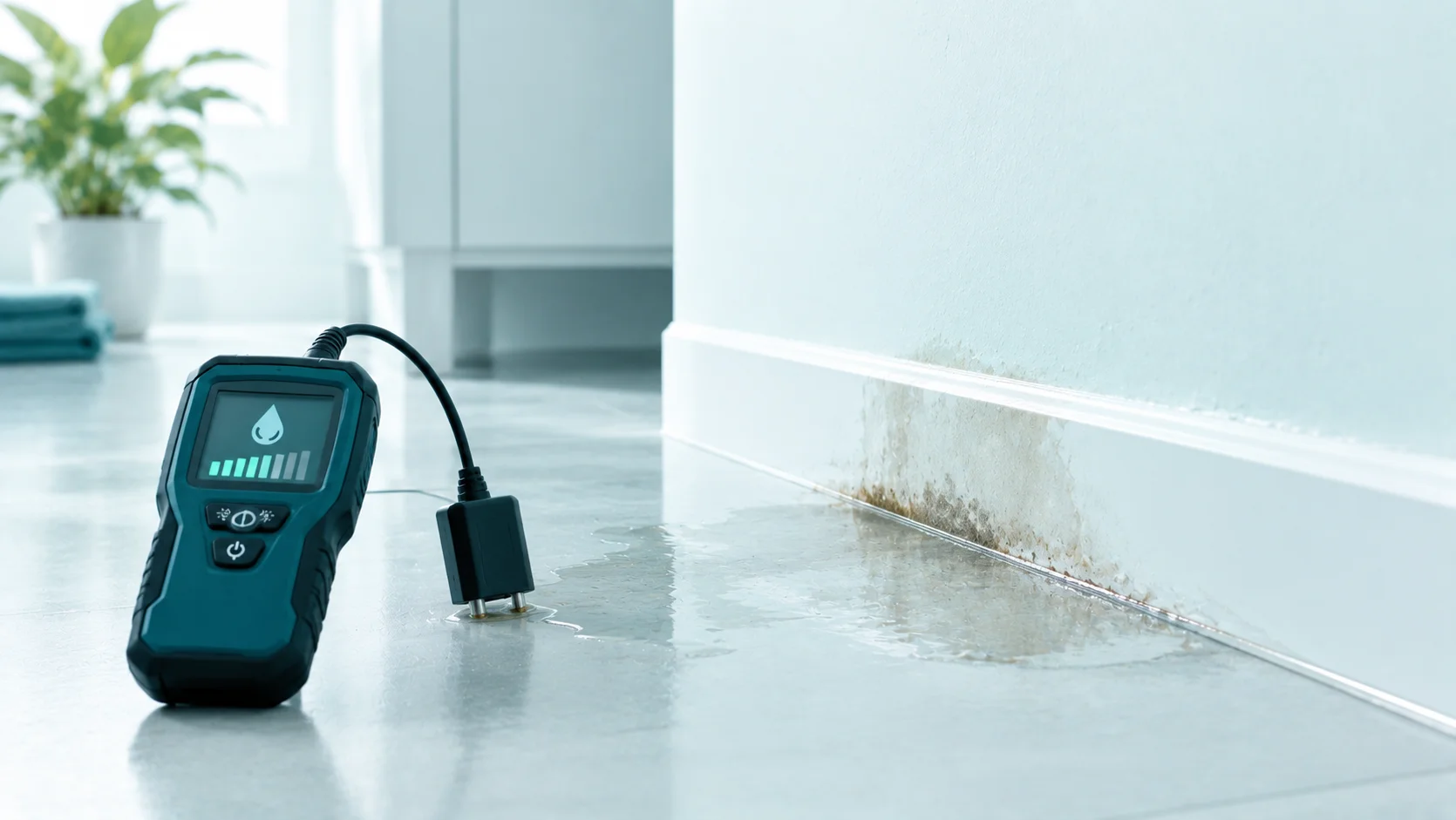
The fastest way to find a hidden water leak is to turn off everything that uses water and watch your meter for two hours. If the reading changes at all, water is escaping somewhere. From there you narrow it down: close the main shutoff to learn whether the leak is inside the house or on the underground line, then check toilets, fixtures, appliances and outdoor plumbing one at a time. Most hidden leaks turn out to be a worn toilet flapper or a weeping fixture — not a burst pipe in a wall.
Found a leak? Price it out Water Leak Cost Calculator Open →Signs you may have a hidden leak
Leaks rarely announce themselves. Watch for these clues:
- A rising bill with no change in how you use water.
- A moving meter when every tap and appliance is off.
- Sound — hissing or running water in a quiet house.
- Warm spots on a floor, which can point to a leaking hot-water line under a slab.
- Stains, bubbling paint, warped flooring or a musty smell.
- Soggy or unusually green patches in the yard, especially along the line from the street.
No single sign proves a leak. The meter test does, so start there.
Step 1: Compare your usage with a baseline
Pull your bill for a cold month such as January or February, when outdoor use is minimal. EPA's WaterSense program says a family of four that exceeds 12,000 gallons per month could have serious leaks. That works out to roughly 100 gallons per person per day, at the top of the 80–100 gallons the U.S. Geological Survey cites for typical indoor use. If you are well above that, keep going. You can estimate your own expected use with the household water usage calculator.
Step 2: Run the water meter test
- Stop all water use. Pause the dishwasher, washing machine, ice maker, irrigation timer and humidifier, and make sure no one flushes.
- Find the meter. It is usually in a ground-level box near the street or curb; in cold climates it may be in a basement or garage.
- Look for the low-flow indicator. Many meters have a small triangle, dial or star that turns with even a trickle. If it spins with everything off, water is moving.
- Record the reading, wait two hours, read again. Per EPA, if the meter changes at all you probably have a leak.
- Convert the change. Many meters read in cubic feet, and one cubic foot is about 7.48 gallons.
Tiny leaks need longer. A cubic-foot register may not tick over in two hours for a very small leak. If the two-hour test shows nothing but you still suspect a leak, take the first reading at bedtime and the second in the morning, with no water used in between.
The change in the reading tells you how big the problem is. Assuming the leak runs steadily, here is what a two-hour change on a cubic-foot meter means:
| Meter change in 2 hours | Gallons per hour | Gallons per day | Gallons per month |
|---|---|---|---|
| 0.1 ft³ | 0.37 | 9 | 270 |
| 0.5 ft³ | 1.9 | 45 | 1,350 |
| 1 ft³ | 3.7 | 90 | 2,690 |
| 5 ft³ | 18.7 | 449 | 13,500 |
Step 3: Work out which side of the house it's on
Close the main shutoff valve where the water line enters your home, then check the meter again.
- Meter still moving: the leak is on the underground line between the meter and the house. That needs a plumber or your utility.
- Meter stops: the leak is inside the house or on the irrigation or outdoor lines after the main.
To narrow it further, repeat the meter test with one branch closed at a time. Shut the cold-water inlet to the water heater: if the meter stops, the leak is on the hot side. Close each fixture's stop valve in turn, and the one that stops the meter is your culprit. This is simple flow logic — whatever you isolate that stops the meter is where the water was going.
Step 4: Check toilets, fixtures and appliances
Toilets first. They are the most common hidden leak because the water slips silently from tank to bowl.
Toilet dye test. Put a few drops of food coloring in the tank and wait 10 minutes without flushing. If color shows up in the bowl, the flapper is leaking. Flush right afterward to avoid staining the tank. EPA recommends replacing flappers at least every five years. To price a leaking one, try the running toilet cost calculator.
Faucets and showers. Look for moisture on faucet gaskets and pipe fittings, and under sinks at the supply lines and stop valves. A dripping faucet is a surface leak you can see; the dripping faucet cost calculator shows what it adds up to.
Appliances. Inspect the washing-machine hoses, dishwasher supply, refrigerator ice-maker line and any water softener connections. Check the water heater for moisture at its base, around the fittings and on the temperature-and-pressure relief discharge pipe.
Step 5: Check outdoors and irrigation
Walk the exterior with the house still shut off. Look at hose bibs for drips, and check that garden hoses have good washers at the spigot. For in-ground irrigation, EPA advises inspecting the system each spring before use in case frost damaged it. Look for soggy ground, geysers or unusually lush strips of lawn, and watch for a zone valve that weeps when the system is off. Pool auto-fill lines are another quiet source.
Slab, wall and underground leaks: when to call a pro
If the meter moves with the main closed, or the clues point to a wet wall or a warm floor, stop guessing. Plumbers use acoustic listening equipment, thermal imaging and pressure testing to locate a leak before anything is opened up. Do not cut into drywall or concrete on a hunch.
For ongoing protection, EPA's WaterSense program publishes a guide to leak detection and flow-monitoring devices, which can alert you to unusual use or help shut water off. They don't replace an inspection, but they catch problems early.
What a leak wastes, and what it costs
Small leaks add up faster than they look. EPA's figures for common household leaks:
| Leak | Water wasted |
|---|---|
| Faucet dripping once per second | More than 3,000 gal per year |
| Showerhead leaking 10 drips per minute | More than 500 gal per year |
| Irrigation leak 1/32 inch wide | About 6,300 gal per month |
| Average household leaks, combined | More than 9,300 gal per year |
To price your own leak, turn the meter result into a monthly volume and multiply by your rate:
That rate is only an illustration; yours will differ. The water leak cost calculator does the conversion with your own numbers.
Common mistakes
- Testing while something is running. An ice maker, softener regeneration or irrigation timer can move the meter and look like a leak.
- Misreading units. Confirm whether your meter reads gallons or cubic feet before you convert.
- Stopping at the first leak. Repeat the meter test after each repair; there is often more than one.
- Ignoring small drips. They are cheap to fix and expensive to ignore.
- Waiting on suspected slab leaks. Hidden water damages floors and framing and feeds mold.
The bottom line
Shut everything off, read the meter, wait two hours. A change confirms a leak; closing the main tells you which side of the house it's on; and a dye test and a walk around the fixtures find the usual suspects. If the meter keeps moving with the main closed, or you suspect a slab or wall leak, call a licensed plumber. Once it's fixed, put a number on what it cost with the calculator above.
Frequently asked questions
How can I tell if I have a hidden water leak?
Run the meter test: turn off everything that uses water, record your meter reading, wait two hours without using any water, and read it again. If the reading changes at all, you probably have a leak. Other clues include a bill that rises with no change in habits, the sound of running water in a quiet house, warm spots on the floor, damp or stained walls, and soggy patches in the yard.
How do I check for a leak using my water meter?
Make sure no water is being used, note the reading and any low-flow indicator, wait two hours, then read it again. EPA says any change means you probably have a leak. If your meter reads in cubic feet, remember that one cubic foot is about 7.48 gallons, and wait overnight if a two-hour test shows nothing but you still suspect a small leak.
How do I find a leak under the slab or underground?
Close the main shutoff valve at your house and watch the meter. If it keeps moving, the leak is on the underground line between the meter and the house. Slab leaks often show up as a warm patch on the floor, the sound of running water, or a damp spot in the yard. Pinpointing them takes acoustic listening gear or thermal imaging, so call a licensed plumber.
How much water does a leaking toilet waste?
EPA says an old or worn flapper can silently leak thousands of gallons a year. The exact amount depends on how badly the seal fails. Use the dye test to confirm a leak, and replace the flapper, which EPA recommends doing at least every five years.
Will a hidden leak show up on my water bill?
Usually, yes. Compare your usage in a colder month, such as January or February, against what your household should use. EPA suggests that a family of four using more than 12,000 gallons a month could have serious leaks. Because many utilities base sewer charges on water volume, a leak can raise that part of the bill too.
Who should I call for a hidden water leak?
Call a licensed plumber if the meter moves with the main valve closed, if you suspect a slab or in-wall leak, or if you cannot locate the source. If the leak is on the utility's side of the meter, call your water utility. Some utilities offer bill adjustments for repaired leaks, so ask before you pay a large bill.
Sources & references
The leak figures and test methods in this guide follow federal guidance:
- U.S. Environmental Protection Agency, WaterSense — Fix a Leak Week. Source of the two-hour meter test, the 10-minute toilet dye test, the 12,000-gallon winter benchmark and the leak-waste figures.
- U.S. Environmental Protection Agency, WaterSense — Know Your Flow: Leak Detection and Flow Monitoring Devices (fact sheet). Background on leak detection and flow-monitoring devices.
- U.S. Geological Survey, Water Science School — How much water do I use at home each day? Typical indoor use of about 80–100 gallons per person per day.
Conversions (1 ft³ ≈ 7.48 gal), the leak-rate table and the cost example are our own estimates, not source figures.
Water Systems Specialist · Austin, Texas
A Texas-licensed Professional Engineer with 13+ years in residential water systems, John leads the science, flow and pressure guides on Water Calculator. Read full bio
Licensed Professional Engineer (PE) · Specializes in water density, flow and pressure