How Much Water Does a Shower Use? Gallons by Minute and Flow Rate
Two numbers decide it: your showerhead's flow rate and how long the water runs. Here's what a typical shower actually uses, how to work out your own, and where the real cost hides.
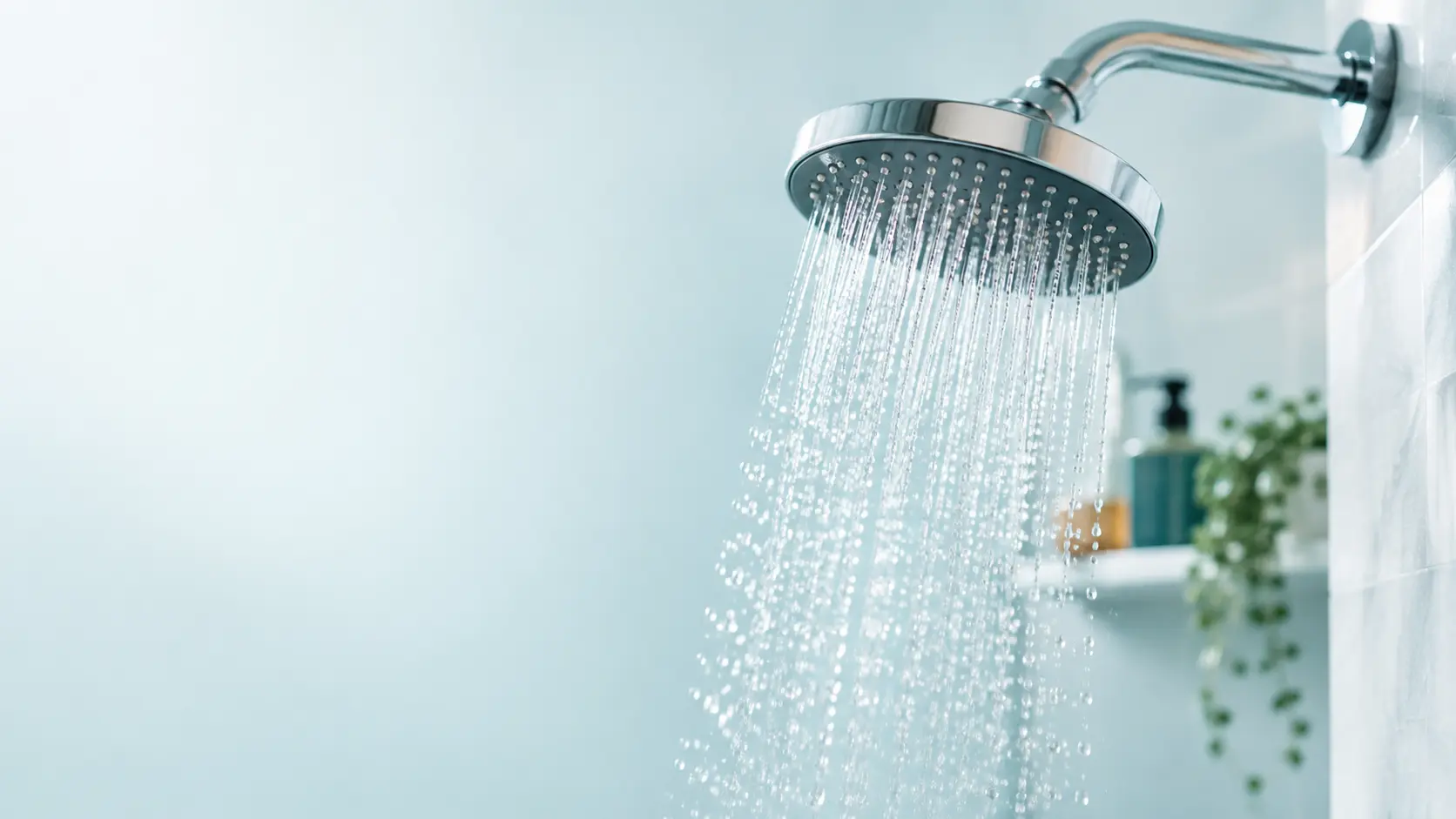
A shower uses about 2 to 2.5 gallons of water for every minute it runs with a modern showerhead, so a typical 8-minute shower uses roughly 16 to 20 gallons (60 to 75 liters). The measured US average is about 15.8 gallons per shower. Your own number depends on just two things — your showerhead's flow rate and how long you stand under it — and both are easy to check.
Skip the math Shower Water Usage Calculator Open →Shower water use at a glance
Find your shower length on the left and your showerhead's rating across the top. The 2.5 gpm column is the federal maximum for new showerheads; 2.0 gpm is the WaterSense efficiency level; 1.5–1.8 gpm covers most low-flow models.
| Shower length | 1.5 gpm | 1.8 gpm | 2.0 gpm | 2.5 gpm |
|---|---|---|---|---|
| 5 minutes | 7.5 gal | 9.0 gal | 10 gal | 12.5 gal |
| 8 minutes | 12 gal | 14.4 gal | 16 gal | 20 gal |
| 10 minutes | 15 gal | 18 gal | 20 gal | 25 gal |
| 15 minutes | 22.5 gal | 27 gal | 30 gal | 37.5 gal |
| 20 minutes | 30 gal | 36 gal | 40 gal | 50 gal |
To convert to liters, multiply gallons by 3.785. A 20-gallon shower is about 76 liters.
The pattern is worth noticing: shaving five minutes off a shower saves more water than dropping from a 2.5 to a 2.0 gpm showerhead over a typical shower length. Time and flow both matter, but time is the one you control every day.
What the average shower actually uses
The best real-world data comes from the Water Research Foundation's Residential End Uses of Water study, which logged fixture-by-fixture water use in homes across North America. Its 2016 update found that the average American shower uses about 15.8 gallons, lasts 7.8 minutes, and runs at an average of 2.1 gallons per minute.
That 2.1 gpm figure surprises people who assume showerheads deliver their rated 2.5 gpm. There are two reasons for the gap. First, the rating is a maximum measured at a test pressure of 80 psi, and most homes run lower than that, so real flow comes in under the label. Second, many homes already have heads rated below 2.5 gpm, and people don't always open the valve all the way.
The same study found shower length barely changed between 1999 and 2016 — the drop in shower water use came almost entirely from better showerheads, not shorter showers. That's why fixture standards have done most of the heavy lifting on shower efficiency.
Where showers rank at home. According to the EPA, showering accounts for nearly 17% of residential indoor water use — about 40 gallons a day for the average family. Only toilets consistently use more indoors.
Calculate your own shower
Shower water use is one multiplication:
The flow rate is usually stamped on the showerhead face or printed on its packaging. But the stamped number is a maximum, and a clogged or older head can deliver something quite different. To find your actual flow, use the bucket test:
- Mark a bucket at the 1-gallon line (fill it from a gallon jug first).
- Turn the shower on fully at your usual setting and hold the bucket under the spray.
- Time how many seconds it takes to reach the mark.
- Divide 60 by that number of seconds.
Plug your measured flow and a realistic shower time into the shower water usage calculator for daily, monthly and yearly totals, or use the shower flow rate calculator if you'd rather work from a fill time directly.
Showerhead flow rates explained
Flow rate is the lever that sets your baseline, and it's also what regulations target. In the US, the Energy Policy Act of 1992 capped new showerheads at 2.5 gpm. The EPA's voluntary WaterSense label goes further, requiring no more than 2.0 gpm along with minimum spray-force and coverage performance, so a labeled head shouldn't feel weak. Several states, including California, set their own caps below the federal limit for showerheads sold there.
| Showerhead type | Flow rate | 8-minute shower |
|---|---|---|
| Older, pre-1990s head (unrestricted) | 3.5–5+ gpm | 28–40+ gal |
| Standard (federal maximum) | 2.5 gpm | 20 gal |
| WaterSense labeled | 2.0 gpm or less | 16 gal or less |
| Low-flow / high-efficiency | 1.5–1.8 gpm | 12–14.4 gal |
| Multi-head or rain panel (each outlet counts) | 5+ gpm combined | 40+ gal |
Two practical wrinkles are worth knowing. First, water pressure changes the real flow. For a simple fixed-orifice head, flow scales roughly with the square root of pressure, so a 2.5 gpm head rated at 80 psi delivers only about 2 gpm at 50 psi — an estimate, since many modern heads use pressure-compensating restrictors that hold flow steady instead. If your shower feels weak, the shower pressure calculator can help separate a pressure problem from a showerhead problem.
Second, multiple outlets add up. Each showerhead or body spray is allowed its own rating, so a shower with a rain head plus a handheld running together can easily double the water use of a single standard head.
Per day, per year, per household
Individual showers look small; the annual totals don't. Using the 15.8-gallon average shower, one shower per person per day:
One shower
15.8 gal
About 60 liters — the US average per shower.
One person, one year
~5,770 gal
A daily average shower for 365 days — roughly 21,800 liters.
Family of four, one year
~23,000 gal
Enough to fill a small above-ground pool several times over.
"Navy" shower
~3–4 gal
Water on to wet, off to lather, on to rinse — about 2 minutes of flow at 1.5–2.0 gpm.
These are estimates built on the national average; your household's real figure could be half or double depending on showerheads and habits. The water usage per person calculator puts showers alongside everything else you use in a day.
Shower vs. bath: which uses more?
Filling a standard bathtub to a comfortable bathing depth typically takes somewhere around 25 to 40 gallons, depending on the tub and how full you like it. Compare that with the table above and the answer is clear for most people: a normal-length shower uses less water than a bath.
The crossover point is closer than many expect, though. With a 2.5 gpm head, a shower reaches 25 gallons at 10 minutes and 40 gallons at 16 minutes. Long showers under a standard head — or any length under a multi-outlet setup — can match or beat a bath. For a direct comparison with your own tub size and shower habits, use the bath vs. shower water calculator.
The hidden cost: heating the water
Most people think of a shower's cost as a water bill line. In practice, heating the water usually costs more than the water itself. A comfortable shower runs around 100–105 °F, and cold supply water typically enters a home somewhere between 40 and 70 °F depending on climate and season. Every gallon has to be warmed across that gap.
At an example electricity price of 17¢ per kWh and a typical electric tank's efficiency, that's roughly 35¢ per shower just for heating; gas water heaters usually come in lower, often around half that. Add the water and sewer charges — about 16¢ for 15.8 gallons at an example combined rate of 1¢ per gallon — and an average shower costs roughly 30 to 50 cents all in. Those are illustrative figures; run your own rates through the shower cost calculator, or the energy to heat water calculator for the heating side alone.
This is also why efficient showerheads save energy, not just water. The EPA estimates the average family could save 2,700 gallons a year by switching to WaterSense-labeled showerheads — along with more than 330 kWh of electricity from reduced water-heater demand.
How to use less without a worse shower
The goal isn't a miserable trickle; it's cutting the water you don't notice. In rough order of payoff:
- Swap an old showerhead. If the bucket test shows 3 gpm or more, a WaterSense head at 2.0 gpm or less cuts every shower by a third or more, permanently, for the price of a basic fixture.
- Trim two or three minutes. At 2.0 gpm, each minute saved is 2 gallons. A timer or a short playlist makes this automatic.
- Stop the warm-up waste. Water run while waiting for heat goes straight down the drain. Catch it in a bucket for plants, or step in as soon as it's warm.
- Turn the water off while lathering. Many showerheads have a pause button that keeps your temperature setting while the flow stops.
- Descale the head. Mineral build-up doesn't usually increase flow, but it scatters the spray so the shower feels weaker and people run it longer. A vinegar soak restores the pattern.
To see what a new head is worth over a year for your household, the low-flow fixture savings calculator compares your current and new flow rates directly.
The bottom line
A shower uses its showerhead's flow rate multiplied by the minutes it runs. With a modern head that's about 2 to 2.5 gallons per minute, the average US shower comes to about 15.8 gallons, and an 8-minute shower lands between 16 and 20 gallons. Measure your real flow with a one-gallon bucket, keep an eye on shower length, and remember that the energy to heat the water is often the larger share of the cost. For your exact numbers, the calculator below does the math in seconds.
Frequently asked questions
How many gallons does a 10-minute shower use?
About 20 gallons with a 2.0 gpm WaterSense showerhead and 25 gallons with a standard 2.5 gpm head. A 1.5 gpm low-flow head cuts that to about 15 gallons for the same 10 minutes.
How much water does the average shower use?
About 15.8 gallons (59.8 liters) in the United States, based on the 2016 Residential End Uses of Water study. The typical shower in that study lasted 7.8 minutes at an average flow of 2.1 gallons per minute.
Does a shower use less water than a bath?
Usually, but not always. A typical 8-minute shower uses roughly 16 to 20 gallons, while filling a standard tub to bathing depth takes roughly 25 to 40 gallons. A long shower flips that: 20 minutes under a 2.5 gpm head uses about 50 gallons.
What counts as a low-flow showerhead?
US federal law caps new showerheads at 2.5 gallons per minute. Heads that earn the EPA WaterSense label must use no more than 2.0 gpm, and many efficient models run at 1.5 to 1.8 gpm. Some states set their own limits below the federal one.
How can I find my showerhead's flow rate?
Hold a bucket marked at 1 gallon under the running shower and time how long it takes to fill. Divide 60 by the number of seconds to get gallons per minute. If it fills in 30 seconds, the flow is 2.0 gpm.
How much does one shower cost?
For an average 15.8-gallon shower, roughly 15 to 20 cents in water and sewer charges plus roughly 15 to 35 cents to heat the water, depending on local rates and whether the water heater runs on gas or electricity. Heating is often the bigger share.
Does low water pressure mean a shower uses less water?
Usually yes. Flow through a showerhead falls as pressure drops, so a 2.5 gpm head at modest household pressure often delivers closer to 2 gpm. Pressure-compensating heads are the exception: they hold a steady flow across a wide pressure range.
Sources & references
Flow-rate limits and average-shower figures in this guide come from the following references:
- U.S. Environmental Protection Agency, WaterSense — Showerheads. Standard showerheads use 2.5 gpm, WaterSense-labeled models no more than 2.0 gpm; showering is nearly 17% of residential indoor water use, about 40 gallons per day for the average family.
- Alliance for Water Efficiency, Home Water Works — Showers. The average American shower uses about 15.8 gallons over 7.8 minutes at 2.1 gpm, per the 2016 Residential End Uses of Water study.
- Water Research Foundation — Residential End Uses of Water, Version 2: Executive Report. Shower duration held steady at 7.8 minutes between the 1999 and 2016 studies.

Water Quality & Sustainability Specialist · Portland, Oregon
Sarah covers water quality, treatment, household water usage and conservation on Water Calculator, with a focus on turning usage data into savings people can act on. Read full bio
MS · Specializes in water quality, water usage and sustainability